
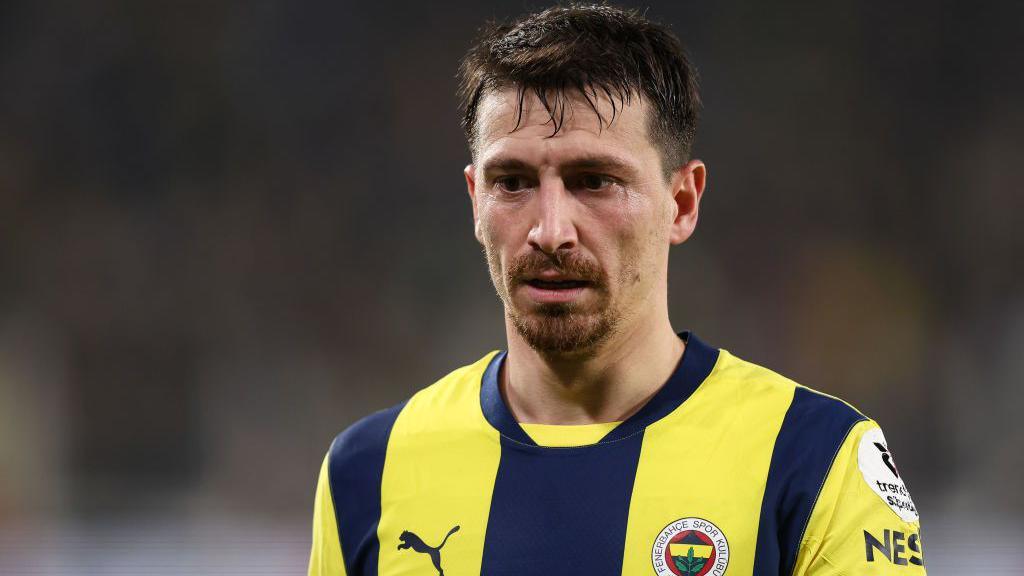
A wide-ranging investigation into unlawful gambling implicating figures in Turkish soccer is ongoing, with scores of athletes, team presidents and referees under scrutiny.
A series of law enforcement operations have taken place, detentions have been carried out, and over 1,000 players have been banned as the scope of the inquiry keeps expanding.
The head of the Turkish Football Federation stated this week that he perceived "a rising sense of panic" within the sport "as the probe intensifies."
Last month, the federation banned 1,024 players from its top divisions as part of a gambling investigation.
It then issued suspensions to 102 players from its top two divisions for "betting-related activities."
Last week, prosecutors called for the arrest of 46 people, including players, club presidents, commentators, and a referee, over suspicious wagering in the country's top football tiers.
Among those arrested were a star from Galatasaray Metehan Baltaci and Fenerbahce's skipper Mert Hakan Yandas, as well as former Adana Demirspor president Murat Sancak.
Athletes, club officials, and match officials are banned from betting activities by national and global football regulations.
So, what is going on and how could the situation evolve in Turkey?
How Did the Probe Start?
The betting scandal first surfaced on 27 October and was initially centered on match officials.
A five-year federation investigation found that 371 out of 571 match officials in Turkey possessed gambling profiles, with 152 of those regularly placing bets.
While some had bet only once, 42 had wagered on over 1,000 football matches, with one official found to have placed an astonishing 18,227 bets.
Of these 152 referees, 7 were first division referees and 15 were top-flight assistant referees.
Shortly after the initial revelation, Istanbul's chief criminal prosecutor stated the findings would be treated as a formal criminal complaint and that existing investigations would be broadened.
The investigation then expanded past match officials.
- 7 November: Prosecutors order the detention of 21 people on suspicion of "manipulating match results" and "spreading false data online."
- 10 November: Eight suspects - among them the president of Super Lig side Eyupspor, Murat Ozkaya - are detained.
- 10 November: The federation states it has referred 1,024 players to the disciplinary board for betting violations. So many players are banned that an extra period to the winter transfer window is requested to help clubs with squad shortages.
- 13 November: 102 players from the first and second divisions are given bans from 45 days to 12 months. Among them are Metehan Baltaci (nine months) and Eren Elmali (45 days).
- 18 November: 282 third tier players are handed bans.
- 20 November: A further 638 fourth tier and unattached players are banned.
Prosecutors Initiate a Second Wave of Actions
On 20 November, Istanbul's chief prosecutor signalled that further arrests could follow, noting many suspects had placed bets through relatives or third parties.
- 5 December: A second wave of arrests takes place with 46 people taken into custody.
- 8 December: A further 20 people are officially arrested, including Yandas, Baltaci, and Sancak.
What Do Yandas and Baltaci Stated?
Prosecutors allege Yandas had significant financial transactions with a long-time associate and that these funds were transferred into accounts used to bet on Fenerbahce matches.
They assert Yandas engaged in behavior "intended to influence match results."
Yandas refutes betting on his own matches. He states he loaned money to a man who had previously helped him financially and was unaware the money would be used for betting.
He rejects any involvement in match-fixing.
Prosecutors accuse Baltaci of betting on 27 of his own team's matches through a legal site and accessing illegal betting platforms, as well as being "individually engaged in betting activities designed to influencing match results."
Baltaci admits placing bets as a youngster, claiming he did not know it was illegal, but denies betting on Galatasaray matches after joining the first team.
Accusations 'Severely Harm Turkish Football'
The federation president has stated that the betting investigation report - based on state intelligence - have been shared with international football authorities, who have not issued a statement.
Three Turkish clubs are currently competing in European competitions.
Galatasaray's Elmali - banned for 45 days - was removed from the national squad and has missed European matches. Baltaci was not part of Galatasaray's continental roster this season. Another player from a European-competing club also received a 45-day suspension.
A sports lawyer stated the scandal has "seriously damaged the image of Turkish football" but said a transparent process could have a beneficial impact in the future.
"If managed properly, Turkey could send a strong message to the world: that Turkish football has been reformed," he said.
He warned that mismanagement or a opacity could lead to sanctions from international bodies, including possible bans on Turkish clubs in European competitions.
Some of Turkey's leading teams have weighed in.
One club said the initial investigation into referees "might represent a new beginning for clean football," while another called the development "a historic opportunity to rebuild justice in Turkish football."
With possible criminal charges, court cases, and more bans in the pipeline, Turkey's football gambling scandal appears far from over yet.


